


Nifty 50 Outlook 2026: What Should Retail Traders Do in the Current Stock Market?
Nifty 50 is under pressure from global uncertainty, crude oil, foreign selling and weak sentiment. Here’s how retail traders can manage risk and trade smarter.
Nifty 50 is under pressure in 2026. Learn why the market is weak, what may happen next, and how retail traders can manage risk in volatile markets.
MARKET UPDATE
Nifty 50 Outlook 2026: What Should Retail Traders Do in the Current Stock Market?
Seven straight weekly falls, crude above $100 and heavy foreign selling. Here's how a small retail trader can protect capital and trade smarter in a difficult market.
NIFTY BAZAR DESK · Published 28 Sep 2026
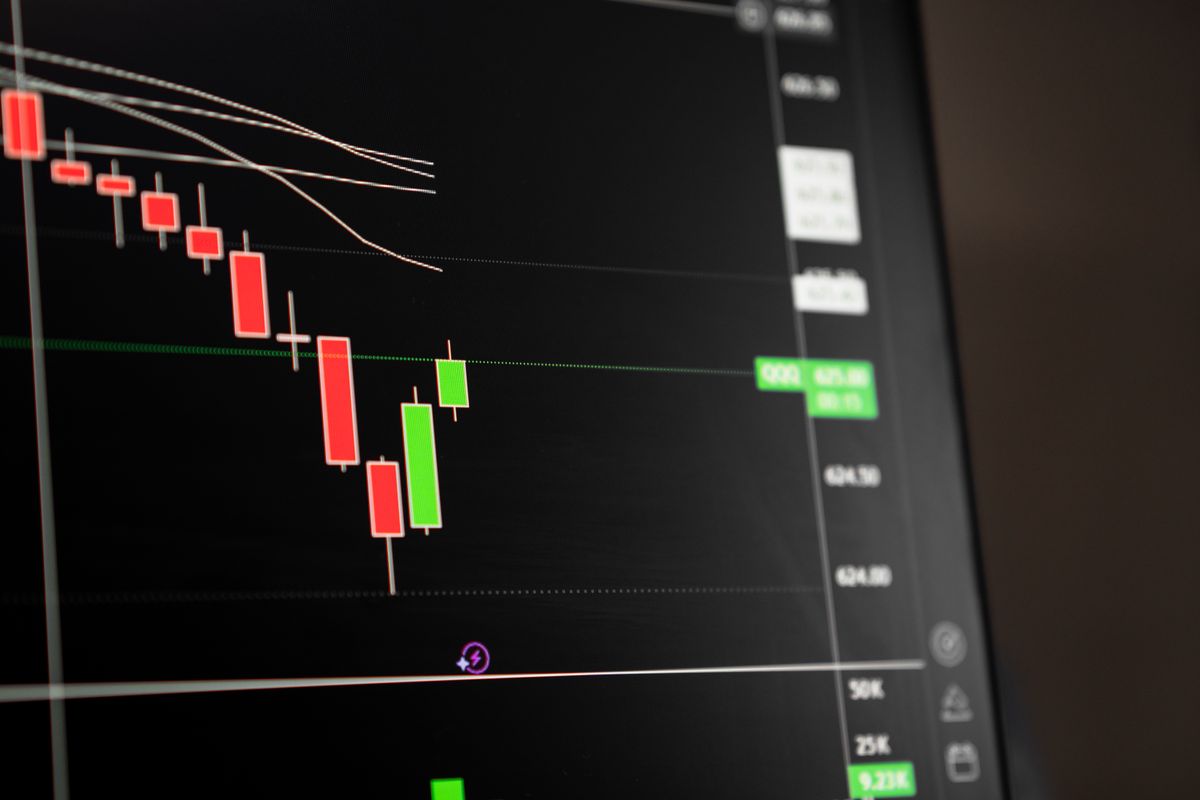
The Nifty has stayed under pressure for an extended period, making it hard for retail traders to generate returns.
NIFTY 50 (28 SEP) ~22,780 ▼ ~1.5% | BRENT CRUDE ~$106.70 ▲ Elevated | INDIA VIX ~13.69 ▲ Rising | FROM SEP 2024 PEAK ~−13% 7th weekly fall |
The Indian stock market is going through a difficult phase. The Nifty 50 has stayed under pressure for an extended period, and many retail traders and investors are finding it hard to generate returns.
As of 28 September 2026, the Nifty 50 closed around 22,780 after falling about 1.5% in the session — roughly 13% below its September 2024 peak. Investors who entered near the 2024 high have faced a long stretch of limited or negative index-level returns. However, individual stocks can perform very differently, so it isn't correct to say every investor who bought Nifty-related stocks in 2024 is still in loss.
What should a small retail trader do in this type of market?
1. Why Is the Nifty 50 Under Pressure?
There's no single reason behind the current weakness — several factors are working together.
01
Rising crude oil prices
India imports a large portion of its crude requirement. When prices rise sharply, the import bill can increase and corporate margins come under pressure. On 28 September, Brent was reported around $106.70/barrel, with geopolitical tensions adding uncertainty.
02
Global interest rates & bond yields
Higher US rates and yields make dollar assets more attractive and pressure emerging-market equities. Market commentary has highlighted US rates, oil and global uncertainty as key factors for Indian equities.
03
Foreign investor selling
When large foreign investors reduce exposure, heavyweight Nifty stocks can face significant selling pressure, dragging the entire index.
04
Weak market sentiment
On 28 September, Nifty recorded its seventh consecutive weekly decline while India VIX moved higher, reflecting increased near-term uncertainty.

Crude above $100 remains one of the biggest pressure points for Indian equities.
2. What About Nifty Futures?
Nifty futures currently show a cautious short-term picture. On 28 September, September Nifty futures closed around 22,918.90 versus the cash Nifty close of 22,780.25, while India VIX rose to about 13.69. You can track live contracts on the NSE option chain.
| Level (Axis Securities view) | Zone |
|---|---|
| Important resistance | 23,500 |
| Important support | ~23,000 |
| Reported short-term trading range | 22,500 – 23,500 |
This is a market-analysis view, not a guaranteed prediction.
Don't trade Nifty futures simply because the market has already fallen.
A falling market can keep falling longer than expected.
3. Should Retail Traders Stop Trading Completely?
Not necessarily — but the strategy should change with the market condition. In a strong trending market, traders may get several clean opportunities. In a volatile or uncertain market, the same strategy can generate repeated stop-losses.
A trader normally risks ₹2,000 per trade. If the market turns highly volatile and he keeps taking 8–10 trades without changing his approach, the accumulated loss can be significant (up to ₹16,000–₹20,000 if most hit the stop). Instead, he can cut the number of trades and focus only on high-quality setups.
Less trading can sometimes be better trading.
4. Avoid Overtrading in the Current Market
This is one of the biggest problems for small traders. A trader loses ₹2,000 and thinks, "I'll recover it in the next trade." That trade also loses, so position size increases. The result is a cycle:
| Loss | → Revenge trading | → Bigger loss |
The solution isn't to predict the market perfectly. It's to control how much you can lose when your prediction is wrong.
5. Be Careful With Options and Futures
Derivatives magnify both profits and losses. SEBI keeps publishing research on individual participation and profitability in equity derivatives, including a dedicated FY2025–26 study released in August 2026 — reported here to show options accounting for roughly 92% of individual traders' aggregate losses.
For beginners, jumping straight into aggressive Nifty options or futures because a premium looks cheap can be dangerous. Before trading derivatives, understand:
|
|
New to options? Start with our guide: What Is Option Trading? Calls, Puts & Strategies Explained With Examples.
A cheap-looking premium is not a reason to trade — understand the risk first.
6. What Should a Small Trader Focus On?
Instead of guessing whether Nifty will reach 25,000 or fall to 20,000, focus on market confirmation. A practical checklist:
Is Nifty making higher highs and higher lows, or lower highs and lower lows?
Where are the important levels?
Is the move backed by meaningful volume?
Are indicators such as RSI supporting the move?
Are most stocks participating, or only a few heavyweights?
Where will you exit if the trade goes wrong?
This shifts the focus from prediction to probability and risk management.
7. What If Nifty Remains Sideways?
If Nifty keeps moving between major support and resistance, breakout strategies can produce false signals. For example, if Nifty repeatedly moves between 22,500 and 23,500, buying every breakout above 23,500 without confirmation can lead to repeated losses when the breakout fails. In such conditions, be more selective and wait for confirmation instead of trading every small move.
Want to learn which strategy suits which market? Study support & resistance, EMA and price action in our Technical Analysis Course, and see how candles signal reversals in How to Read Candlestick Charts Like a Professional Trader.
8. Is the Indian Market Fundamentally Broken?
There isn't enough evidence to say so. The weakness is real, but India's long-term economic and corporate earnings story hasn't disappeared.
Kotak Mahindra AMC — Nilesh Shah Earnings growth ~3% → ~10% → ~12% Nifty 50 earnings growth improved from about 3% in FY25 to ~10% in FY26 and ~12% in Q1 FY27; he flagged oil, US rates and IPO supply as near-term pressures. | J.P. Morgan Earnings recovery, with risks Highlights the earnings recovery while naming oil prices and global bond yields as key risks to India's outlook. |
So the reality is more nuanced than "the Indian stock market is finished." The market can stay weak for an extended period while individual companies and sectors perform very differently.
More context: Nifty 50 Outlook 2026: Why Is the Market Struggling and When Can It Recover? and Indian Stock Market Today: Why Nifty and Sensex Are Falling?
9. What Should Retail Traders Do Now?
Protect capital first. Trade second.
A sensible framework:
- Reduce unnecessary trades
- Avoid revenge trading
- Use a predefined stop-loss
- Keep position size under control
- Don't blindly average losing trades
- Don't trade only because Nifty has fallen
- Wait for confirmation before entering
- Maintain a trading journal
- Focus on liquid stocks and indices
- Never use money needed for household expenses
- Learn technical and risk-management concepts before increasing position size
The objective isn't to make money every single day. It's to stay in the market long enough to take advantage of good opportunities when they appear.
Final Takeaway
The current Nifty 50 environment is clearly challenging. Rising crude, geopolitical uncertainty, foreign selling, global interest rates and weak sentiment are pressuring Indian equities — and nobody can reliably predict when the correction ends or where Nifty trades next.
So instead of asking "Where will Nifty go tomorrow?", ask: "If I am wrong, how much can I afford to lose?" That single change can transform your trading discipline.
Explore the Nifty Bazar Stock Market Technical Analysis Course — candlestick patterns, RSI, EMA, support & resistance, intraday and swing trading, risk management and live chart analysis. 66 lessons, PDF notes, lifetime access and support. Educational only; no profit guarantee.
Explore the Course
Important: This article is for educational purposes only. Stock market trading and investing involve risk. No market level, return or future outcome can be guaranteed.

BAPI SASMAL
More from BAPI SASMAL

Indian Stock Market Today: Why ...
10 Sep 2026
Master candlestick patterns to ...
27 Jul 2026
Gold Price Forecast ...
8 Sep 2026Comments
Learn Market Earn Money


Additional Links
Login Register Contact About Disclaimer Privacy Policy Terms Conditions Refund PolicyContact US


Reply to Comment